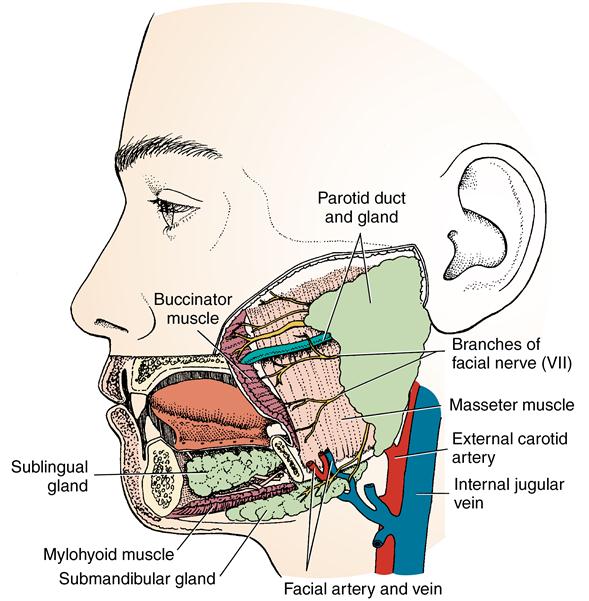
Salivary Gland Histology Salivary Glands Anatomical Stock Vector Biology Diagrams

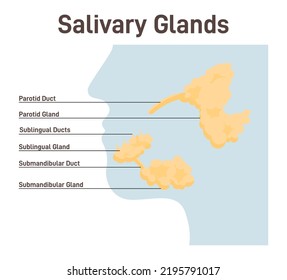
Salivary Gland Histology Salivary Glands Anatomical Stock Vector Biology Diagrams Anatomy. The glands responsible for the production of saliva include the parotid gland, the largest of the salivary glands, the submandibular glands, and the sublingual glands. The structure of the salivary glands consists of a series of ducts that eventually end in either a spherical or tubular secretory acini or end piece.
HIV (human immunodeficiency virus) and AIDS: The virus can cause salivary gland enlargement, fever, pain, and xerostomia (dry mouth).; Sjögren's disease: This autoimmune disease affects moisture-producing glands in the body and causes swelling and dry mouth; Diabetes: High blood glucose (sugar) may cause salivary gland enlargement and lower saliva production.

Review of the Major and Minor Salivary Glands, Part 1: Anatomy ... Biology Diagrams
Salivary gland cysts can develop due to injuries, tumours, Frank H. Netter, MD, Atlas of Human Anatomy, Fifth Edition, Saunders - Elsevier, Chapter 1 Head and Neck, Subchapter 6 Oral Region, Guide Head and Neck: Oral Region - Salivary Glands, Page 35 and 36. The salivary glands are exocrine glands that make, modify and secrete saliva into the oral cavity. Human salivary glands produce between 0.5 to 1.5 L of saliva daily, facilitating mastication, swallowing, and speech, lubricating the oral mucosa, and providing an aqueous medium for taste perception. The salivary glands: anatomy and

Like the parotid glands, the submandibular glands have two parts called the superficial lobe and the deep lobe. Nearby structures include: the marginal mandibular nerve, which helps you smile ; the platysma muscle, which helps you move your lower lip ; the lingual nerve, which allows sensation in your tongue ; the hypoglossal nerve, which allows movement in the part of your tongue that helps
Memorial Sloan Kettering Cancer Center Biology Diagrams
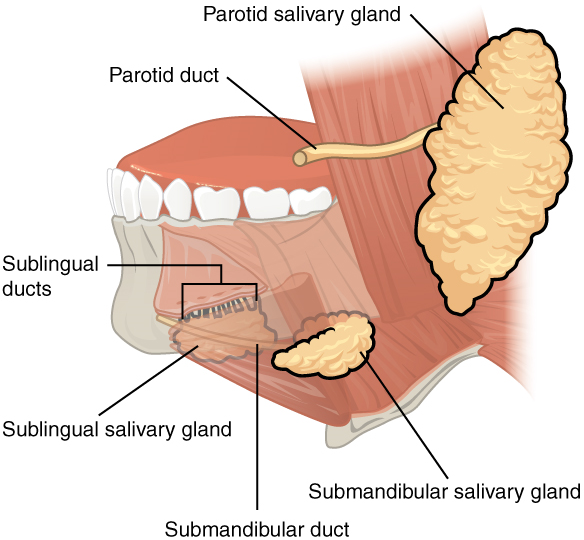
Salivary glands are exocrine glands responsible for producing and secreting saliva into the oral cavity.[8] Saliva aids in moistening food, digestion, lubrication, and oral hygiene. These glands are composed of serous, mucous, or mixed secretory cells that release enzymes, electrolytes, and mucus to maintain oral health and digestive function. Location Salivary glands are located in